
Philanthropic Restoration Manager
Edited: 3 Feb 2026
15 min read


With the launch of Ecologi’s Forests and Landscapes Impact Fund, we are working with our partners to pioneer the next phase of corporate financing for nature restoration.
In this article, we explain a step-change in our industry’s understanding of how to restore nature: shifting the focus from inputs to outcomes.
Landscapes in a global context
At the end of 2023, the State of Finance for Nature Report from the UN Environment Programme described just how underfunded nature-based solutions are.
The UNEP report found that $200 billion USD per year is provided to nature-based solutions – a tiny percentage of the $6.7 trillion USD which is provided annually to activities which directly harm nature. In order to meet our climate, biodiversity and restoration targets (as well as reducing nature-harmful financial flows), almost three times this annual amount of nature-positive investment is required by 2030.
As well as scaling-up the financial flows, we must create multifunctional landscapes where people and wildlife can thrive. This method was described in the recently-updated UNDP Integrated Spatial Planning Workbook, to provide implementation guidance in support of the Kunming-Montreal Global Biodiversity Framework. The landscapes we restore will only remain in a healthy state if those living within them are able to exist harmoniously alongside nature.
As such, our approach holds that any restoration projects that the Ecologi community supports must maintain this holistic approach, and generate lasting positive impacts on people and biodiversity, as well as on our climate.
Any landscape restoration project exists within its own ecological and social landscape, and through working alongside local communities and carefully designing the project activities to be holistic and enduring, the projects we support are much more than just ‘tree planting programmes’.
Why planting trees alone is not the whole story
Nowadays, some of the basic principles of nature and landscape restoration are quite widely understood – for example, most prospective funders are aware of the importance of planting locally-native species. But other critical aspects of project design don’t receive the attention they deserve, because funders are often only thinking in ‘per-stem’ terms, about how many trees have been ‘paid for’ and planted. This means there is a risk of private funding being directed to projects that are not necessarily producing the most impactful results for people, biodiversity and the climate.
Tree planting plays an important role in successful landscape and nature restoration projects. However, there are many other important elements required to run an impactful project – which also require funding. At Ecologi, we have always sought out partners who go beyond tree planting, incorporating many other environmental and socioeconomic elements to their projects in order to produce the most positive outcomes.
Whilst historically we have often championed the number of trees funded for planting by the Ecologi community, it would be wrong to think of this as the main (or only) success metric for how successful our projects have been in restoring nature.
![“[T]he ‘per-stem’ approach often encourages short-term thinking, with projects focused on the immediate goal of planting a certain number of trees rather than ensuring their long-term growth and integration into healthy ecosystems. There needs to be a focus on outcomes and impact – [and] this shift requires moving beyond the simple metric of trees planted to more sophisticated measures of success, such as improvements in biodiversity, carbon sequestration, community engagement, and ecosystem resilience, all which [the Future Forest Company] has been doing since inception.” - Future Forest Company](https://framerusercontent.com/images/7IxqtvivqecDrEGjWVYz5sxc7o.jpg)
Our aim is to make other restoration outcomes as well-understood as the number of trees planted. At Ecologi, we’d love to see a world where the public and businesses are able to appreciate and communicate the cascading positive impacts of funding a landscape restoration project which go beyond how many trees have been planted.
Equipped with this more holistic understanding, businesses who want to do good will put their money towards the very best initiatives, and enable us to collectively have a bigger impact on our planet’s future.
What is landscape restoration?
Landscape restoration is a holistic approach to restoring ecosystems that goes beyond tree planting to include biodiversity, water, soil health and community outcomes.
Our partners on the ground have been thinking this way the whole time – but the demand-side understanding is very much stuck in the past; if corporate funders are only focused on the input of how many trees they are ‘paying to plant’, then it’s very likely that they are missing out on understanding crucial wider components of effective landscape restoration.
We spoke to our long-term restoration partners to gather their thoughts.
The social role of communities in landscape restoration
The level of involvement of local communities in landscape and nature restoration projects is among the strongest indicators of project success, because it is local people who will manage the landscape into the long-term future. If we are serious about restoring ecosystems, then we need to root our restoration efforts in the community itself. It is they, their children, and their children’s children who will look after the forest as it grows and returns to health – a process of decades and centuries.
We also cannot discount the social and economic realities of the communities themselves. The most impactful restoration programmes are those which align the needs and aims of the community with the needs and aims of the ecological restoration activities; otherwise, the structural foundations of the project will always be weak.
![“The projects have to offer something in return to the local population, [such as] an increase in tourism (because biodiversity is coming back), or an increase in access to nutritious food or cleaner water.” - Trees for the Future](https://framerusercontent.com/images/k3eFAtKHROtvnH561zSF5KWj1es.jpg)
Local and Indigenous Peoples’ knowledge is also critical to help sustain a landscape restoration project.
Often, important local historical context is held and shared by local people who have seen the landscape change in their lifetime and have anecdotal evidence passed down through the generations. This knowledge could not be found anywhere else, and it can be instrumental in developing successful outcomes.
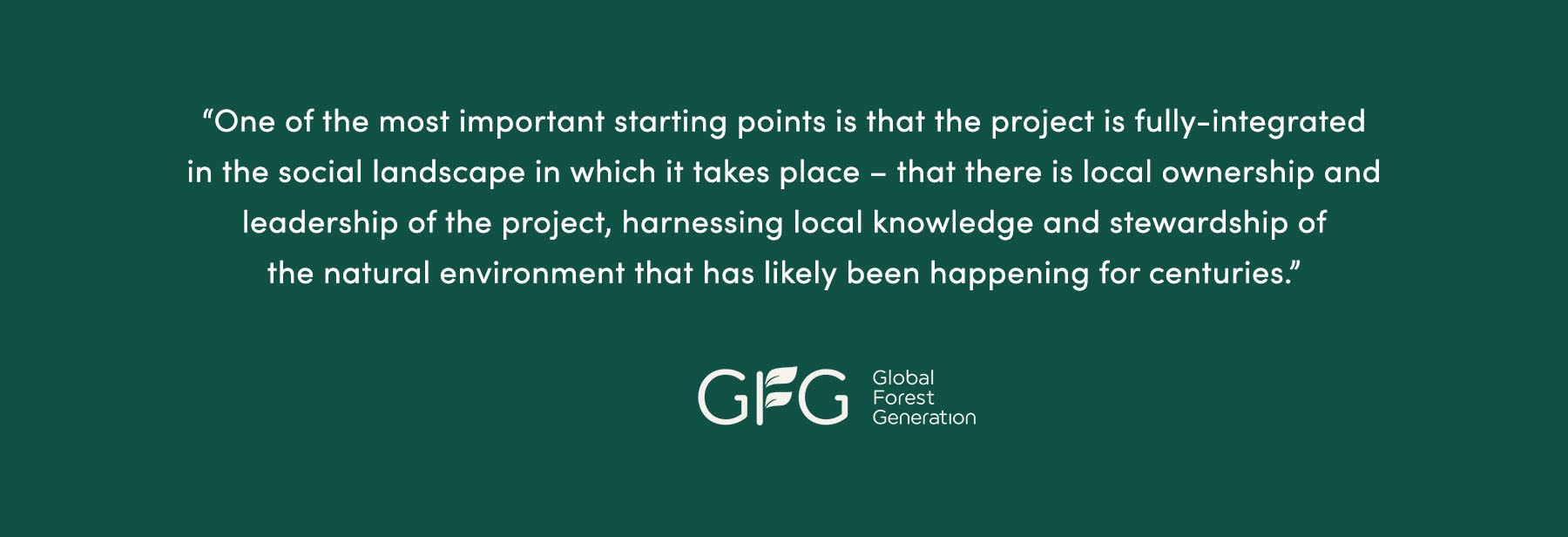
To truly understand the impact of a project, we need to look beyond the solitary ‘trees planted’ metric, and seek out a wider set of indicators which include the social, to help us to understand which projects are generating the most positive impact.
The ecological aspect
We then need to consider the ecological angle. Ecosystems around the world are in desperate need of restoration and protection. We know how important restoring tree cover is for our climate, but restoring other elements of landscapes is also vitally important for planetary health, biodiversity and livelihoods.
From rivers and streams that provide us with clean water, to soils where we grow our food and wetlands that keep carbon locked away, every part of a landscape needs consideration when designing a restoration project. Tree planting can be an effective way of supporting many elements of a landscape, but it is just one tool we can use – and trees are not the right intervention everywhere.
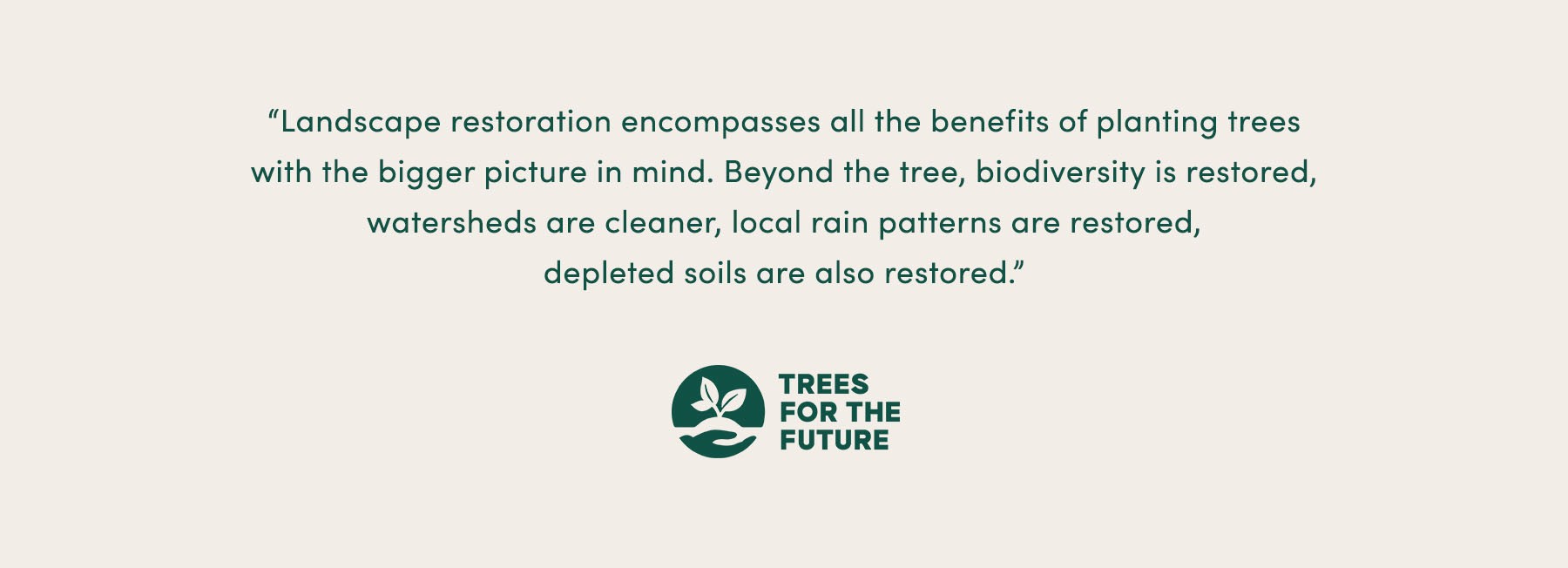
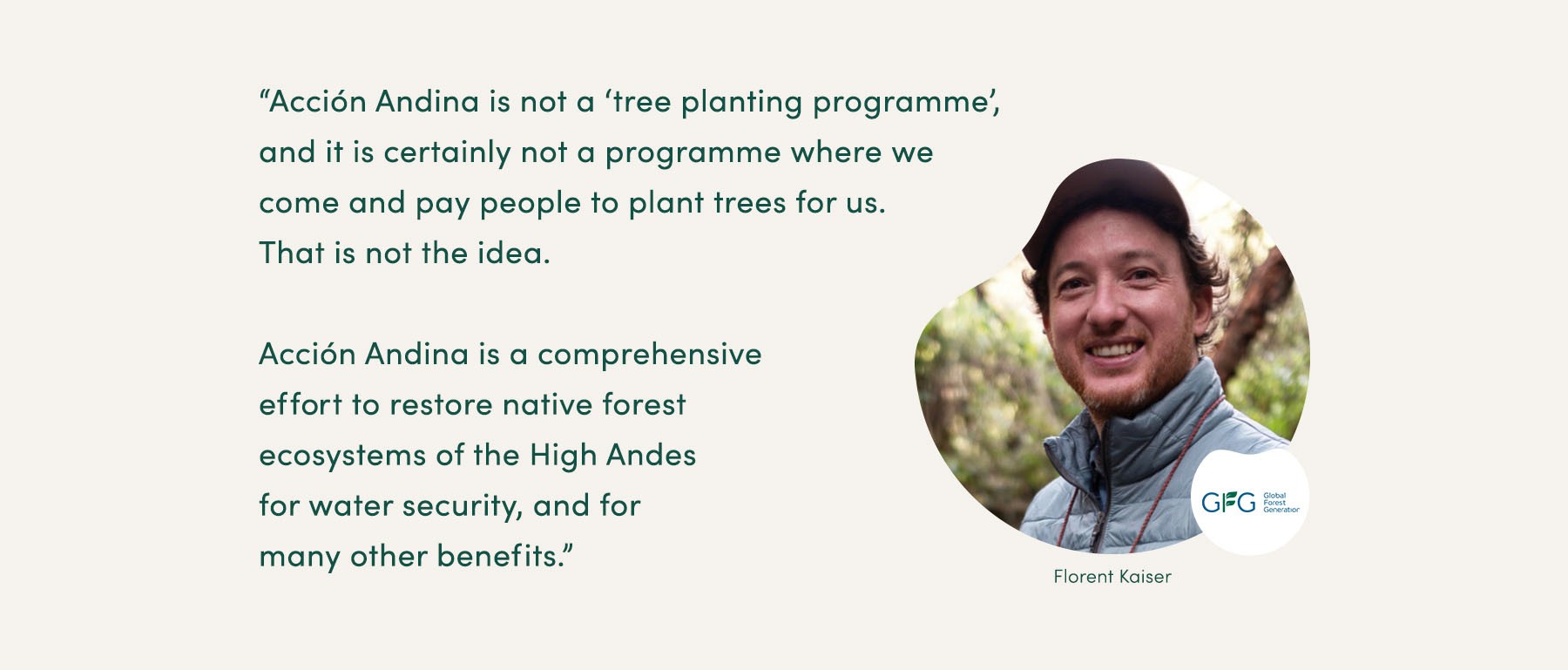
![“Landscape restoration considers the whole ecosystem and the connections it has to other surrounding ecosystems. Even in cases where tree planting is done using native species and happens at a density and volume that "makes sense" ecologically, it's still just planting trees. What impact will planting those trees have in 5 years, 10 years, 50 years? Who is planting those trees and why are they doing it? Who lives on that land, and how do they use it to survive and support their livelihoods? All of these questions have to be considered and for that reason, among many more, tree planting [on its own] is not enough.” - Global Forest Generation](https://framerusercontent.com/images/6isbZ1aoLIE8T4DYWAPAUOtXLw.jpg)
So when we think about a project area – a polygon on a map which could be hundreds or even thousands of hectares in area – it is very unlikely that a singular intervention like tree planting is going to be appropriate uniformly across the whole area. The topography could vary in altitude or aspect (slope direction), and different areas within the polygon could have different wind exposure, rain shadows, soil compositions, wildlife grazing patterns, and so on. There might be existing primary forest which needs preservation rather than new saplings planting amongst it. There might be rivers, streams, lakes or peat bogs. There might be people living in the project area – with houses, facilities and roads or pathways which all need to be factored in.
!["[Landscape restoration] involves a holistic approach to restoring the broader landscape including its ecosystems, biodiversity, water resources, soil health, and overall ecological function. [It goes] beyond planting trees to consider the restoration of entire ecosystems and landscapes and [is] concerned with the interactions between various elements of the landscape" - Future Forest Company](https://framerusercontent.com/images/QHVeAMMTuYnkp5ThCjxysmpakU.jpg)
Our partners have always been concerned with all of this and more, and we want to bring that understanding to our customers and funders who support their projects through Ecologi.
Our partners and landscape restoration
The physical planting of trees can be very cheap. But prioritising high-quality projects that deliver meaningful benefits to the people and wildlife who live there – something Ecologi believes in strongly – comes with other considerations, which cost money.
When our community entrusts funds to Ecologi to support climate action projects, we take our responsibility very seriously and our team works tirelessly to ensure that money is directed towards the most impactful projects, delivered by organisations committed to making a real difference for our planet. It’s not really about ‘paying to plant trees’.
![“Offering to plant trees for cheap does not cover all the real costs of quality projects (training, tools, local staff, benefits, seeds…). Quality projects [which take the holistic approach] ensure a much higher survival rate of those trees.” - Trees for the Future](https://framerusercontent.com/images/2mghRcV3q86qH73a9SE3sEoO7E.jpg)
To date, Ecologi has funded over 80 incredible reforestation projects on 4 continents with 13 partners, and what made them truly impactful was that they have always been being delivered holistically. In reality, each of these is much more than ‘tree planting’ projects. That’s why two of our supported partners were announced as UN World Restoration Flagships in 2024, and one of them won the Earthshot Prize in 2023.
Consequently, we’ve been able to report on incredible benefits brought to local people and wildlife by these projects, from the development of new sustainable income streams enabling local people to send their children to school, to the installation of irrigation systems providing clean drinking water.
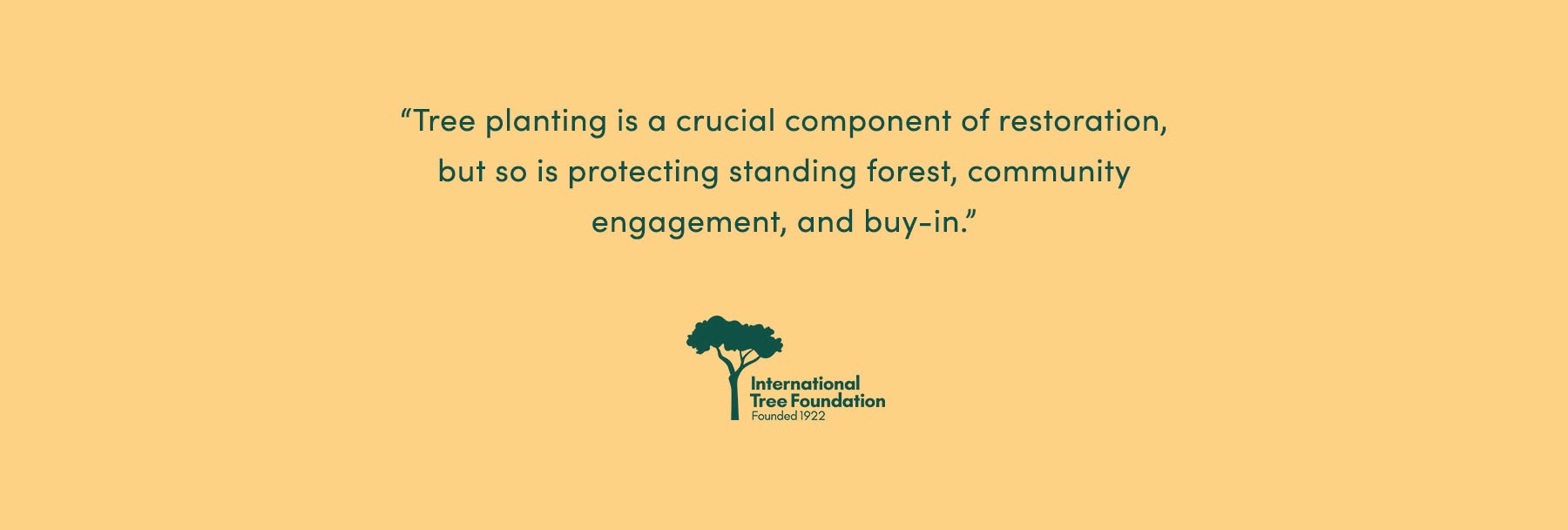
![“Some tree planting programmes have received a lot of negative attention in the last few years, mostly because [they were] not undertaken holistically in the first place. Unfortunately this also means that companies can become sceptical of reforestation in general, which is also not helpful, as reforestation can be a key component of successful, long-term ecosystem restoration.” - Global Forest Generation](https://framerusercontent.com/images/1szmqQmyb7uUgsFqgUqADMW9b8w.jpg)
Finding the highest quality, holistic projects to fund
To support our sourcing of the most impactful projects for Ecologi customers to fund, we have developed a framework. The Nature Projects Assessment Framework (NPAF) was designed to assess a wide range of project types, enabling us to identify their strengths, understand risks and select the best projects to fund.
The NPAF provides a standardised approach for evaluating the quality of nature projects before implementation, filling a critical market gap where few frameworks are able to assess projects prior to measurable results. The framework is built across four interlinked pillars — Biodiversity, Ecosystem Services, Socioeconomic Impact and Governance — which together capture the range of outcomes that nature projects can deliver. Recognising that nature outcomes are inherently complex and slow to materialise, the NPAF instead looks at project potential, pulling from industry best practices to both quantitatively and qualitatively assess different aspects of projects. Ultimately, the NPAF was designed to allow for comparison across project types, geographies and human governance contexts, bringing clarity to how projects are selected and what defines a high-quality nature project.
How can my business make a difference?
On your business’s road to net-zero, you have two central objectives:
First: measure your business’s emissions, set ambitious reduction targets, and reduce your emissions across all scopes as much as possible, as quickly as possible.
Then: support the global transition to net-zero and the restoration of nature by contributing to climate and nature projects around the world.
Under this second step, you’ll come across the phrase ‘Beyond Value-Chain Mitigation’ (BVCM), and it’s a crucial part of your business’s sustainability story. Without businesses taking responsibility for supporting restoration efforts worldwide, we will not reach the levels of nature-positive financing required to address the linked climate and biodiversity crises.
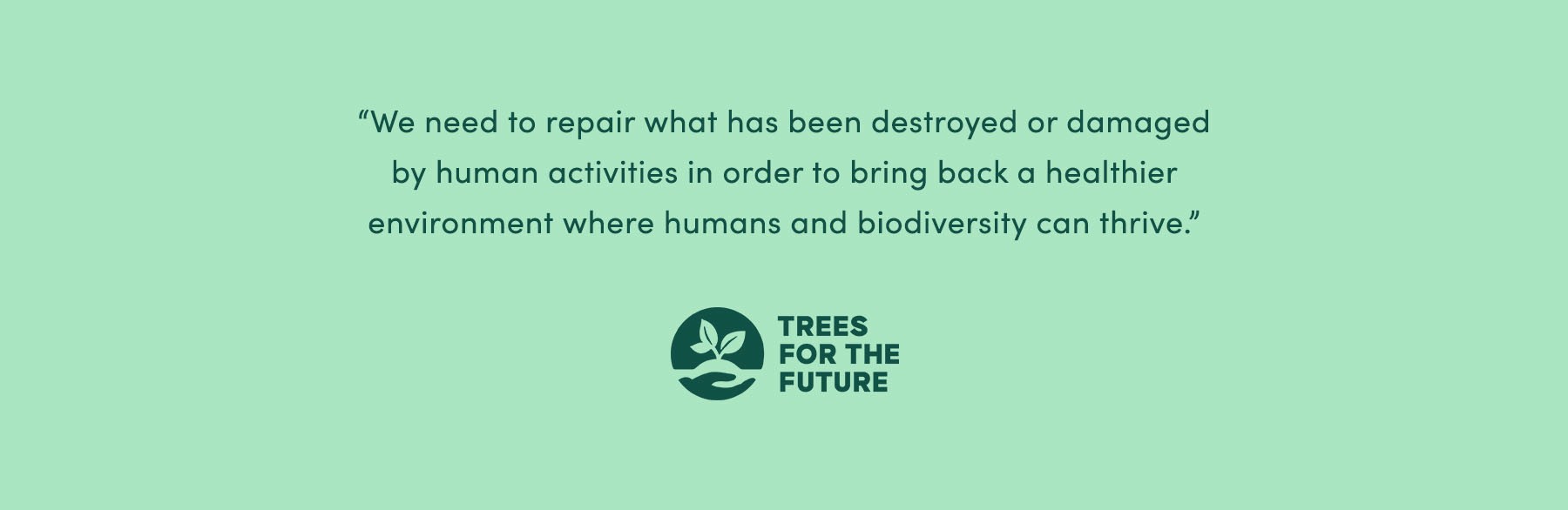
Supporting long-term, large-scale initiatives delivered in partnership with local people can be one of the most effective ways of restoring nature.
Businesses should choose projects that allow them to report on all the impacts they’re contributing towards. Not only will this allow them to demonstrate the variety of ways their business is contributing towards a better future, but by demonstrating a more sophisticated approach to funding climate action.
How can Ecologi help?
Here at Ecologi, we are determined to make it easy for businesses to fund meaningful and holistic climate projects, whilst tackling their own emissions.
Our Impact Funds direct funding towards a range of incredible, holistic projects that are making a difference to local people and biodiversity as well as our climate. As we’ve explored in this article, this means funding much more than simply planting trees, and we want to shift business’ mindsets away from thinking about funding the planting of a specific number of trees, and towards thinking about contributing an amount of money towards holistic forest and landscape restoration.
Some of our partners have already made this shift in communicating the projects’ benefits..
Get in touch to find out more about our Impact Funds.